ServicesSolar Repair
Solar Repair in Hurst, TX
When your panels stop making the power they used to, something specific is wrong. We track down the cause, whether it is the inverter, a wiring fault, a damaged panel or a monitoring glitch, and tell you plainly what it takes to fix it.
What solar repair covers
Solar repair is for systems that are already on your home and not doing their job. Output has dropped, the inverter shows an error, the app went quiet, or a storm left marks on the glass. Most of these problems have one clear cause. Our job is to find it, fix it, and get your production back where it should be.
We work on systems we installed and systems someone else put up. If the original installer is gone or not answering, that is fine. We start from what is on your roof and in your electrical, not from paperwork.
Sometimes the honest answer is that a part is not worth fixing. When that is the case, we say so and explain the options, including replacing a component or adding to the system through our solar panel installation work.
What the repair work includes
Inverter diagnosis and replacement
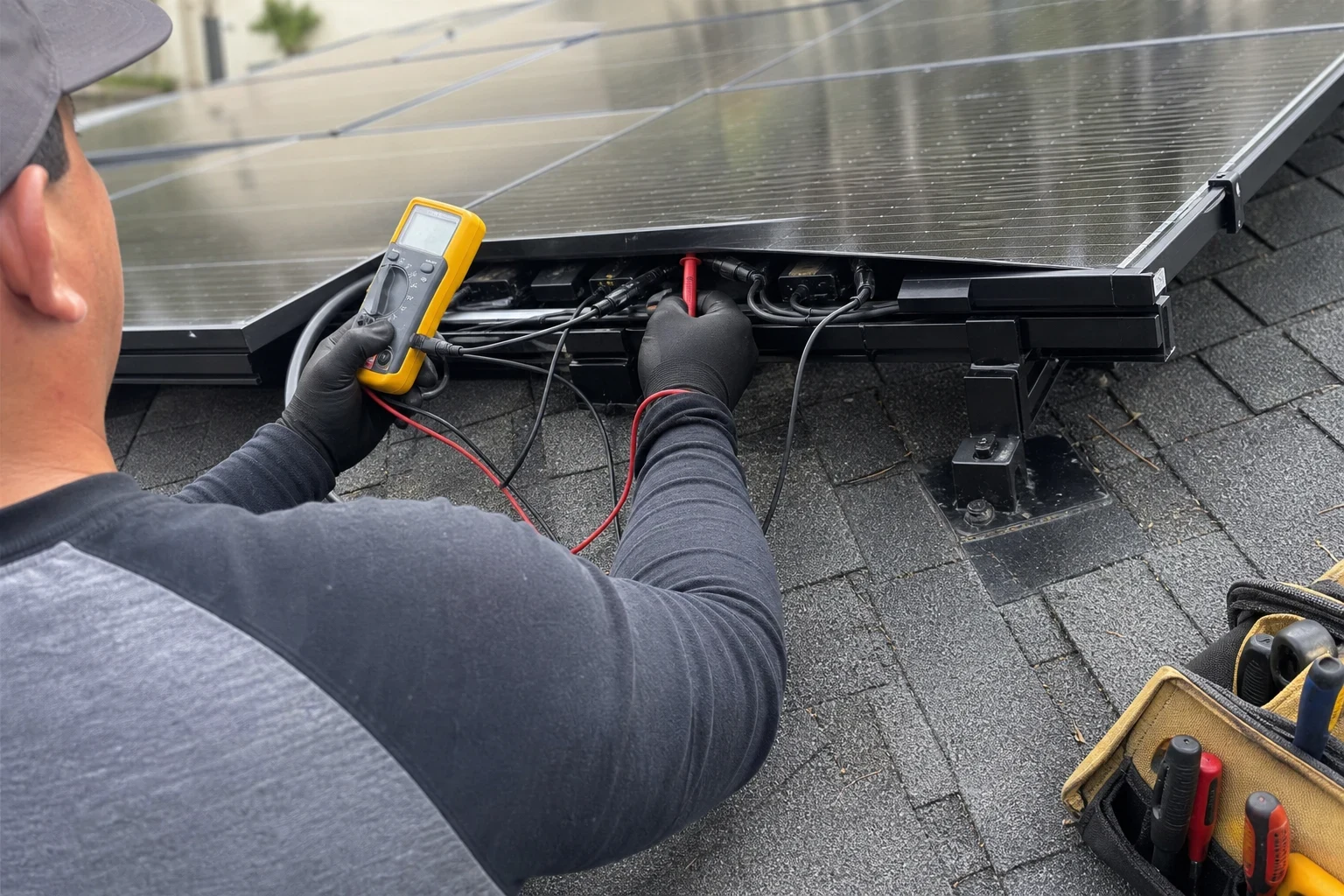
The inverter is the part that fails most often. We read the error codes, check the DC and AC sides, and tell you if it can be reset, repaired under the maker's terms, or needs a new unit.
Microinverter and optimizer swaps
On panel-level systems, one bad unit can hide behind an otherwise normal reading. We find which one has dropped out and replace it at the panel.
Wiring and connector repair
Heat, sun and critters wear on wires and connectors under the array. We replace chewed or cracked wire, reseat loose connectors, and fix corroded terminals.
Damaged panel replacement
Cracked glass and hot spots cut output and get worse over time. We remove the bad panel and fit a matched replacement so the string runs right.
Monitoring reconnection
A lot of 'dead' systems are working fine and just lost Wi-Fi after a router change. We get the monitoring back online so you can see what the system is doing.
Signs your system needs a repair
- Production dropped and stayed down
- A cloudy week explains a dip. Weeks of low numbers on clear days point to a fault somewhere in the system.
- Error lights or codes on the inverter
- A red or orange light, or a code on the screen, means the inverter has shut down or limited itself. Write the code down before you call.
- Your power bill climbed back up
- If your bill looks like it did before solar, the panels may not be feeding your home at all.
- Visible damage after a storm
- North Texas hail can crack panel glass even when it looks minor from the ground. A quick check now keeps a small crack from turning into a dead panel.
- Monitoring shows zero or nothing
- Sometimes it is just the internet connection. Sometimes it is a tripped breaker or a failed part. Either way, we can sort out which.
- Nesting or chewing under the panels
- Squirrels and birds like the shade under an array. Their nests trap heat, and they chew through the outer jacket on the wires.
How a repair visit goes
- 1
Start with a phone call
Tell us what you are seeing, the brand of inverter if you know it, and any error codes. That helps us bring the right parts and testers.
- 2
Test before we touch anything
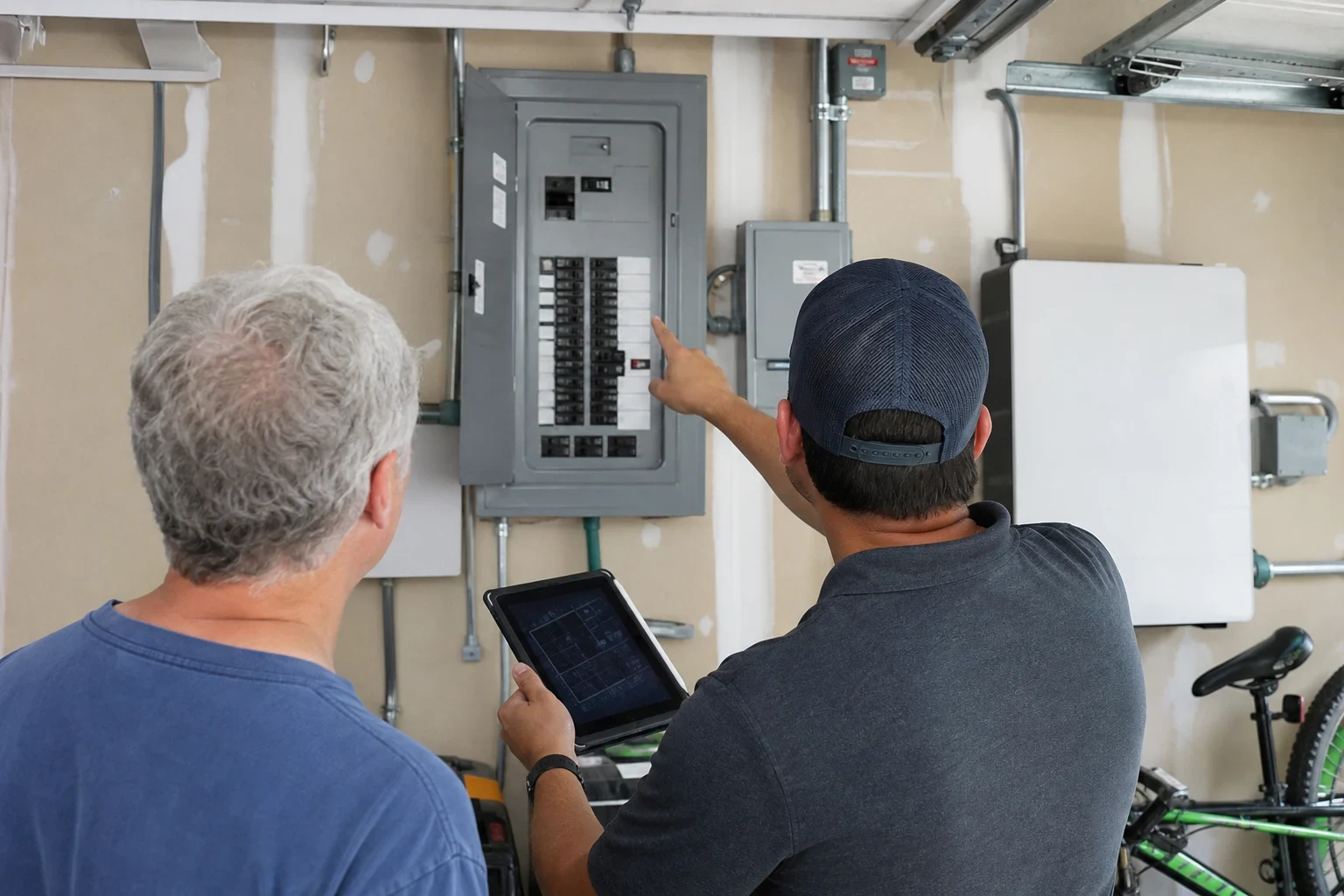
We check the inverter, breakers, strings and connections, and look at the array. You get photos of what we found and a plain explanation of the cause.
- 3
Written estimate and your options
We give you a line-item estimate with the repair, and when it makes sense, the replace option next to it. You pick, no pressure either way.
- 4
Fix, test and clean up
We make the repair, run the system, and confirm it is producing before we leave. Old parts and packaging go with us.
What moves the cost of a solar repair
There is no flat price for repair because the cause varies so much. A reconnected monitor and a replaced inverter are very different jobs. Here is what makes the biggest difference, and we explain each one on your estimate.
- Which part failed
- Reseating a connector or swapping a breaker takes little time and few parts. A central inverter, or more than one panel, means more hardware and more hours on the roof.
- Manufacturer coverage
- Inverters and panels often come with a parts warranty from the company that made them. When yours is still covered, we help put the claim together, and your cost leans mostly toward labor.
- Roof access and array layout
- A steep roof, a two-story home, or a panel in the middle of the array takes more time and safety setup to reach.
- Matching older equipment
- Some panels and inverters are no longer made. Finding a compatible replacement can change both the part and the work involved.
Solar repair questions
- Will you work on a system another company installed?
- Yes. Most repair calls we get are on systems we did not put in. We need access to the inverter and the array, and any paperwork you have helps, but it is not required.
- Is it better to fix a failed inverter or put in a new one?
- That comes down to how old the unit is, what went wrong, and whether parts can still be found. When an older string inverter quits, a new one is usually the better spend. A newer unit may still be under the maker's coverage. We price both paths side by side and you make the call.
- Does homeowners insurance pay for hail damage to panels?
- Many policies cover panels as part of the home, but every policy is different. We document the damage with photos and a written description you can give your insurer. The adjuster and your policy decide coverage, not us.
- Is it safe to reset the inverter myself?
- Following the shutdown and restart steps in your inverter manual is generally fine. Do not open the inverter, touch wiring, or go on the roof. Panels make voltage any time the sun is on them, even with the breaker off.
- Could dirty panels be the reason output is low?
- Dust and pollen do cut production some, but rarely enough to look like a failure. If testing shows the system is healthy and just dirty, we will tell you, and our panel cleaning service handles that.
Tell us what your system is doing
Have the error code or the drop in production handy when you call. We will tell you what it likely means and set up a visit to find the cause.