ServicesPanel Cleaning
Hurst Solar Panel Cleaning
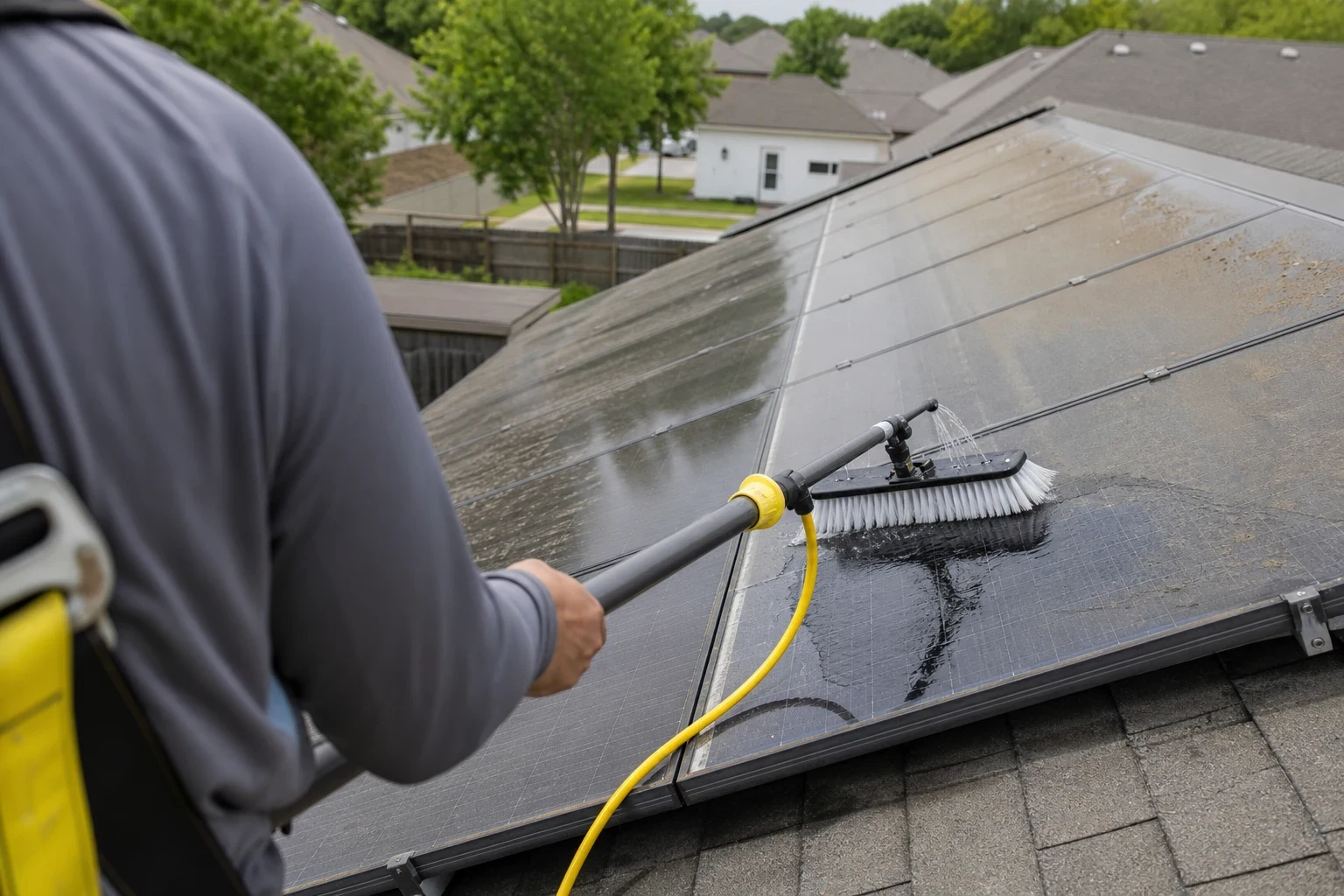
Grime on the glass costs you output. We clean with soft brushes and pure water, never a pressure washer, and read your production afterward so the gain is plain to see. We also check for cracked glass, loose wiring and nests on the way and report anything we spot.
What Panel Cleaning Does and When It Pays
A thin film of dust on the glass blocks some of the sunlight. Bird droppings and leaves block more, and they shade whole cells. One shaded cell can drag down the output of the whole string it sits on.
Rain rinses off loose dust but leaves a muddy line along the bottom edge of each panel. Spring pollen and summer dust around Hurst stick to that film and bake on. Over a few months your production can slip without you noticing.
Cleaning is the right call when your monitoring numbers drop on clear days and nothing else has changed. If the drop is sudden or one panel reads near zero, the cause is usually a fault, not dirt. In that case we'll say so and point you to solar repair instead of selling you a wash.
What Every Cleaning Includes
Before-and-after output check
We look at your inverter or app readings before we start and again when we finish. You get real numbers, not a promise.
Pure, filtered water
Tap water here is hard and leaves white mineral spots that block light. We use filtered, deionized water that dries clean with no soap left behind.
Soft brushes, low pressure
Pressure washers can force water past seals and scratch the coating on the glass. We use soft-bristle brushes and a gentle rinse.
Spot treatment for stuck-on mess
Bird droppings and sap get a soak and a careful scrub. No scrapers, no harsh chemicals.
A visual check of the array
We look for cracked glass, scorch marks, loose or hanging wires, damaged racking and animal nests under the panels. You get photos of anything that needs attention.
Signs Your Panels Need Cleaning
Output is down on sunny days
Compare this month to the same month last year. A slow, steady drop with clear weather usually means dirt.
You can see a film from the ground
If the glass looks gray or hazy, it's already costing you power.
Bird droppings on the glass
Even a few spots shade cells. They harden fast in the heat and won't rinse off in rain.
Dirt lines along the bottom edge
Water carries dust down and leaves it at the frame. That strip shades the bottom row of cells.
It's been over a year
Most systems around here do well with a cleaning once or twice a year, often after spring pollen.
What Cleaning Day Looks Like
- 1
Start with a call
Let us know your panel count, the height of your house and what your numbers are doing. You get a plain price and a date on the calendar.
- 2
Read the output first
On arrival we record what the system is producing. If those numbers suggest something is broken, you hear about it before any water goes on.
- 3
Wash the glass
We work in the morning while panels are still cool. Cold water hitting sun-heated glass can stress it, so afternoon washing is off the table.
- 4
Inspect the array
Clean glass makes cracks and scorch marks easy to see. We also look over the wiring, the racking and the space beneath the panels.
- 5
Walk you through it
You see the updated output and any photos we took. We pack up and leave your yard as it was when we got there.
What Moves the Price
Cleaning is priced by the job, and we explain the price on the phone before we come out. A few things change how long the work takes. We don't add charges on the day for things we didn't discuss.
- Number of panels
- More panels means more time on the roof. This is the biggest factor.
- Getting up to the panels
- Panels on a second story, or on a roof with a sharp slope, take longer to rig ladders and safety lines for. We also move slower once we're up there.
- How dirty they are
- A light dust film goes fast. Months of baked-on droppings, sap or lichen take extra soaking and scrubbing.
- Access
- Tight side yards, trees over the roof or panels split across several roof faces add time.
Questions About Cleaning Your Panels
Something not covered here? (817) 687-0256
How often do panels need a cleaning?
Around here, one or two cleanings a year covers most homes. Late spring, once the pollen settles, works well. Houses close to trees, fields or busy roads can need more. Watch your monitoring app to judge.
Can I rinse the panels with my own hose?
A garden hose from the ground will knock off loose dust. Our hard tap water leaves spots, though, and droppings stay put. Stay off the roof, and skip soap and pressure washers.
Doesn't rain do the job?
Only partly. Rain washes away loose dust, but it leaves grime along the lower edge and can't shift droppings or baked-on pollen.
Can cleaning damage the panels or roof?
Not with our method. Soft brushes and plain pure water are what most panel makers recommend. We place our feet with care and never stand on the panels.
How much will my output go up?
That depends on the dirt. A light dusting means a small gain, while panels caked in droppings can gain a great deal. We take readings before and after so you see the change.
What happens if you spot a problem?
You get photos and a plain explanation. If a fix is needed, our solar repair crew can take it on, and the choice to proceed is yours.
Ready for Clean Panels?
Tell us what your system looks like and what your numbers are doing. We'll tell you if it's dirt or something else and what the job will take.