ServicesRoof-Mounted Solar
Roof-Mounted Solar in Hurst, TX
Most solar in our area goes on the roof. We check that your roof can carry it, lay out panels where the sun actually hits, and seal every mount so the system makes power without letting water in. You get a plain answer on fit before anything is ordered.
What roof-mounted solar is and when it makes sense
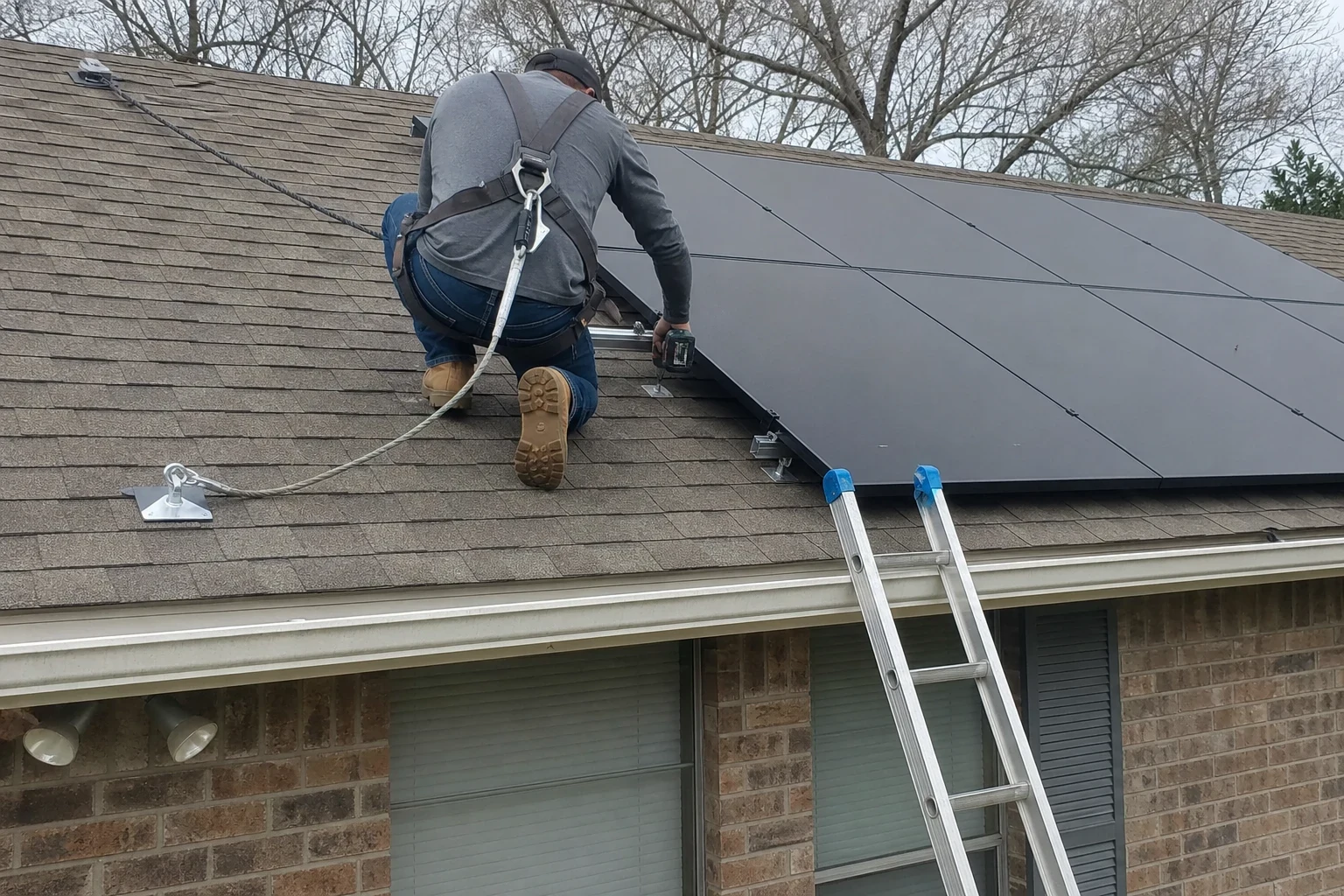
A roof-mounted system bolts rails to your rafters through the roof deck, then clamps panels to those rails. The roof does double duty. It already faces the sky, it keeps the panels out of the yard, and the wiring run to your electrical panel is usually short.
It is the right call when your roof has decent sun on a south, west or east face, the shingles have years of life left, and the structure is sound. If one of those is missing, we say so. A roof near the end of its life should be replaced by your roofer before panels go up, because taking a system off later adds cost you could have avoided.
If you want the full picture on system size, permits and utility hookup, our Solar Panel Installation page covers that. This page is about the roof side of the job.
What the work includes
Roof and attic check
We look at shingle condition, soft spots in the decking and rafter size and spacing. If something worries us, you see a photo of it.
Layout around shade and vents
We map trees, chimneys, plumbing vents and roof edges, then place panels where they produce and where fire code setbacks allow.
Flashed attachments
Each mount lands in a rafter and gets a metal flashing slid under the shingle course above it, plus sealant. Water sheds over the flashing instead of into the bolt hole.
Racking and panels
Rails are leveled and torqued, panels are clamped and grounded, and wire is clipped up off the shingles so it does not rub or sag.
Wiring, permit and inspection
We run conduit to your electrical panel, pull the city permit and meet the inspector. The system is not switched on until it passes and the utility approves the hookup.
Signs roof-mounted solar fits your home
- A big summer electric bill
- If your bills climb hard from June through September, a roof system can offset a good share of that air conditioning load during the sunniest months.
- An open south or west roof face
- Long, unbroken roof planes with little tree cover give you the most panels in the best spot.
- A newer roof
- Shingles with plenty of life left mean the panels can stay put for years without a removal and reinstall.
- No room in the yard
- Most lots here do not have open ground to spare. The roof uses space you already have.
- You expect to keep the house
- The savings stack up a little each month, so the real return shows up over several years. The longer you live in your home, the more of it lands in your pocket.
How the job goes
- 1
Phone call and roof look
We talk through your bills and goals, then come out to check the roof, the attic and your electrical panel.
- 2
Layout and written numbers
You get a panel layout and a line-item estimate. If the roof needs work first, we tell you before you sign anything.
- 3
Permit and utility paperwork
We file with the city and the utility. Approval timing depends on them, and we keep you posted.
- 4
Install day
Most homes take one to two days on the roof. We lay down drop cloths, keep ladders off flower beds and pick up screws and scrap before we leave.
- 5
Inspection and turn-on
Once the city inspector and the utility both sign off, we power the system up. Before we go, we walk you through the monitoring so you can see what your panels made each day.
What moves the cost
Price is mostly about how many panels you need and how hard your roof is to work on. Two homes the same size can come in very different. We break it down line by line so you see where the money goes.
- System size
- More panels means more racking, more wire and more labor. Size comes from your usage, not from how much roof you have.
- Roof pitch and layout
- Steep roofs need extra safety gear and slow the crew down. Panels split across several faces need more wiring and more inverter capacity.
- Roof material
- Composition shingles are the most straightforward. Tile and metal need different mounts and more care, which adds time.
- Electrical panel
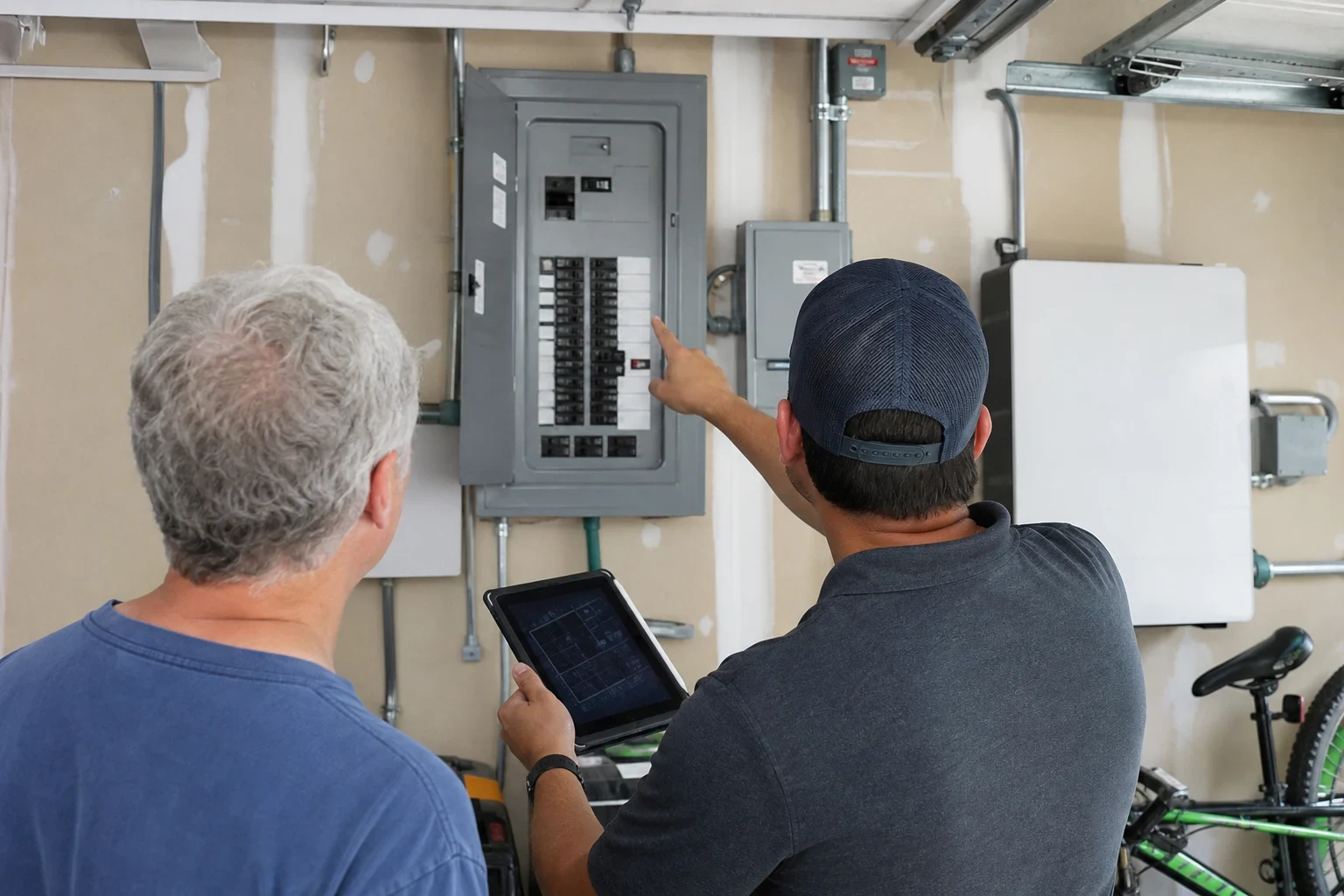
- An older or full main panel may need an upgrade before it can take solar. We open it up during the roof visit, and if an upgrade is needed, it shows up on your estimate from the start.
- Equipment choice
- Microinverters or optimizers cost more than a single string inverter but handle partial shade better. We explain the tradeoff for your roof.
Questions about solar on your roof
- Can the mounts cause a roof leak?
- Not when they are installed properly. Each bolt is set in a rafter, flashed beneath the shingle above it and sealed. The flashing keeps the water out, and the sealant is a second line of defense.
- Does my roof need replacing first?
- Only when it is close to worn out. We check it and tell you honestly. If it needs a new roof, your roofer handles that, and we put the panels on afterward.
- Can panels stand up to hail?
- The glass is tempered and rated to take hail hits, and it often fares better than the shingles below. A really big hailstone can still crack a panel. Our Solar Repair page explains what we do when that happens.
- What if the roof needs repairs down the road?
- The panels can come off and go back on. That costs real money, so plan around how old your roof is before installing.
- Is the system heavy?
- Most systems add just a few pounds per square foot, shared across lots of rafters. Nearly every roof carries that without trouble. We look at the attic framing to confirm.
- Do dust and pollen cut production?
- A light coat of dust lowers output a little, and rain washes most of it away. When it piles up, our Panel Cleaning service gets production back.
Find out if your roof is ready
Tell us about your roof and your bills. We will tell you what fits, what it costs and what to fix first, if anything.